Send WordPress Form Submissions Anywhere With Webhooks (No Zapier Needed)
Getting a form submission out of WordPress and into another tool — a CRM, a spreadsheet backend, a Slack channel, your own server — usually gets pitched as a job for Zapier or Make. Those work, but they're a paid middle step for something a form plugin can often just do directly: fire a webhook.
What a webhook actually does here
When someone submits your form, instead of (or in addition to) saving the
entry, the plugin sends a POST request straight to a URL you specify —
your own server, a serverless function, or the endpoint your CRM or
automation tool exposes for exactly this purpose. No third-party
subscription sits in between.
Setting one up
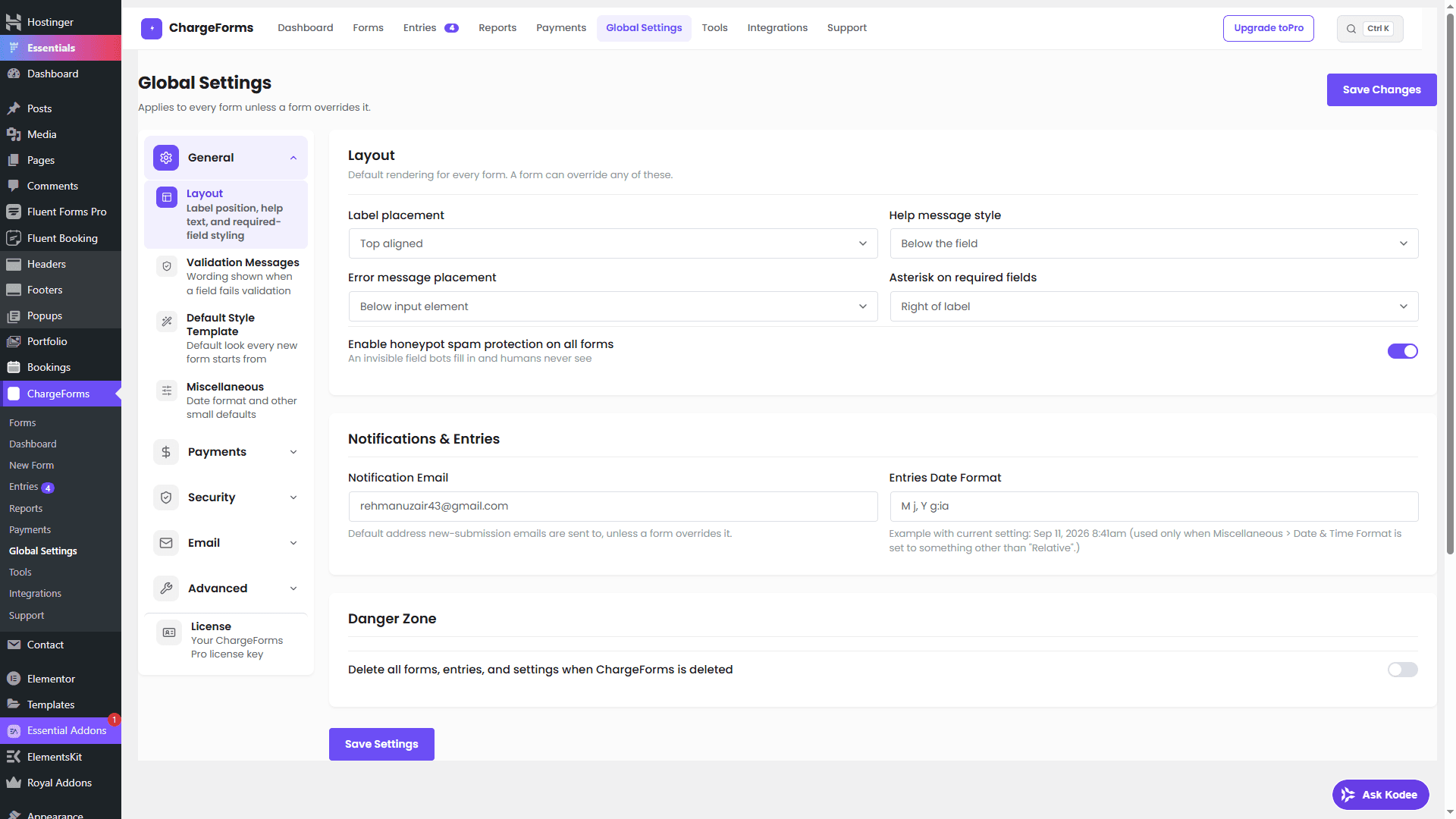
In ChargeForms, go to ChargeForms → Integrations and add a webhook URL. That becomes the site-wide default — every form on the site fires to it on submission unless you override it.
To send one specific form's submissions somewhere different, open that form's own Settings screen and set a form-level webhook URL, which takes precedence over the site-wide default for that form only.
What actually gets sent
A POST request with a JSON body containing the form ID, submission
timestamp, and every submitted field keyed by field ID. File upload
fields send the resulting attachment URL in the payload, not the raw file
— so the receiving end gets a link, not a binary blob to store itself.
What happens if the webhook fails
A webhook delivery failure — a non-2xx response, or a timeout on the receiving end — doesn't block the entry from being created. The submission is always saved first; the webhook is a best-effort side effect on top of it, not a requirement for the entry to exist. Turn on Global Settings → Integration Failure Notices to get an admin email alert when a delivery fails, so a broken endpoint on the receiving side doesn't fail silently for weeks.
Where this beats a Zapier-style setup
Zapier and Make are genuinely useful when you need multi-step logic between apps — branching, delays, formatting data differently per destination. But if the actual need is just "send this submission to my own endpoint," a direct webhook does that with one less paid subscription and one less service in the request path. See the full webhooks documentation for the payload reference.
Related posts
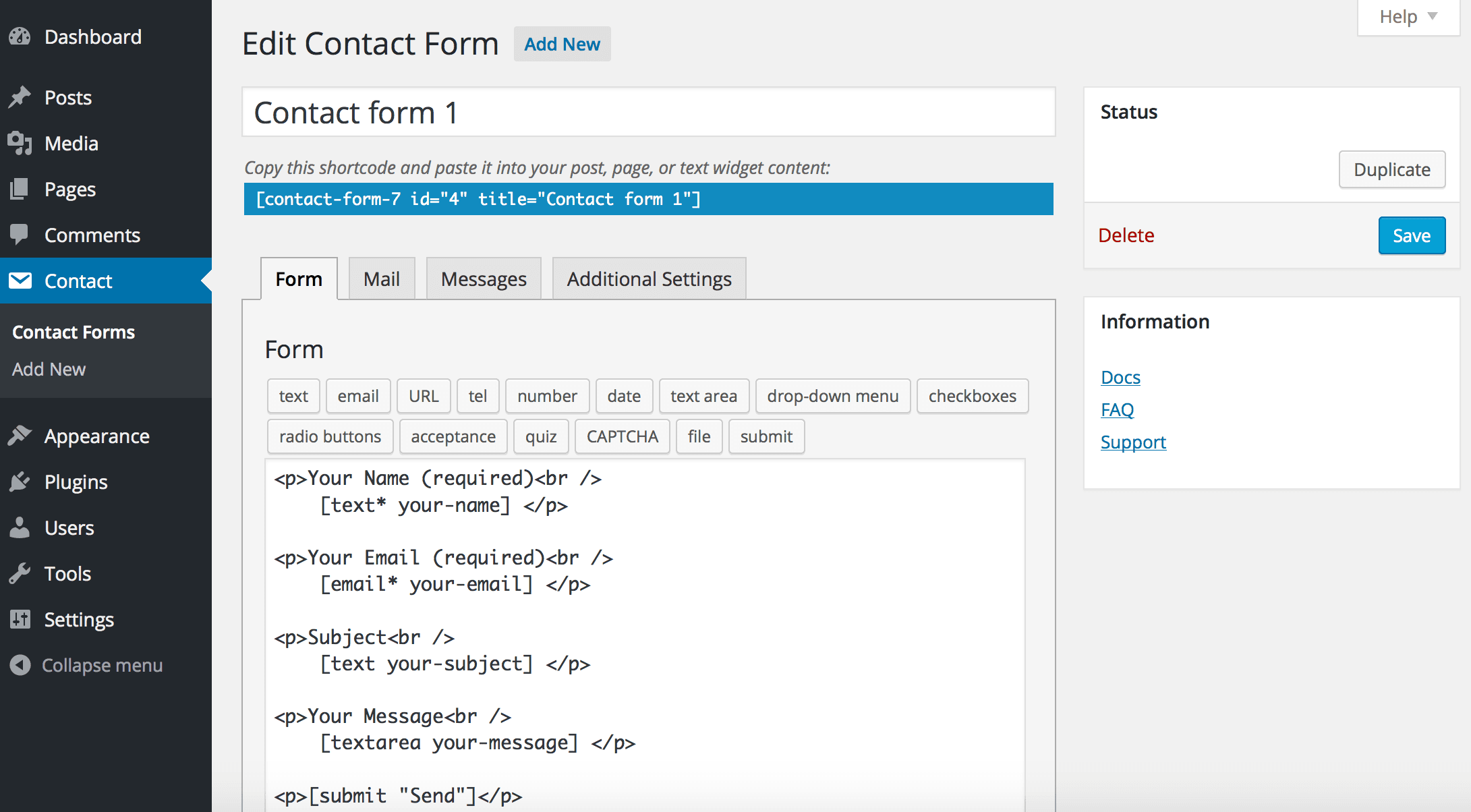
Contact Form 7 Is in Maintenance Mode: What That Actually Means
Contact Form 7's creator confirmed at WordCamp Asia 2026 that version 6.2 is the last feature release — the plugin now gets security patches only. Here's what changes, what doesn't, and what to actually do about it.