How to Build a Client Intake Form in WordPress (Free)
A client intake form has one job most contact forms don't: filtering out the leads you don't want before they ever get on a call with you. A generic "Name, Email, Message" contact form makes every single inquiry look the same — a real project with a real budget looks identical to someone shopping around with no intention to actually hire. An intake form built with the right fields, in the right order, fixes that.
What makes an intake form different from a contact form
A contact form asks "how do I reach you." An intake form asks "should I bother reaching out." The difference is entirely in what it collects and how it uses that information before a human ever sees it:
- A budget range, not just a project description — the single most useful qualifying field on the form.
- Conditional logic that changes what's asked (or whether the form can even be submitted) based on an earlier answer — the mechanism that actually does the filtering.
- A timeline field, since "I need this by Friday" and "sometime next year, just exploring" are very different leads deserving different responses.
- Often, a multi-step layout — a long intake form completes better broken into short, logical steps than as one long page.
Building it: the fields
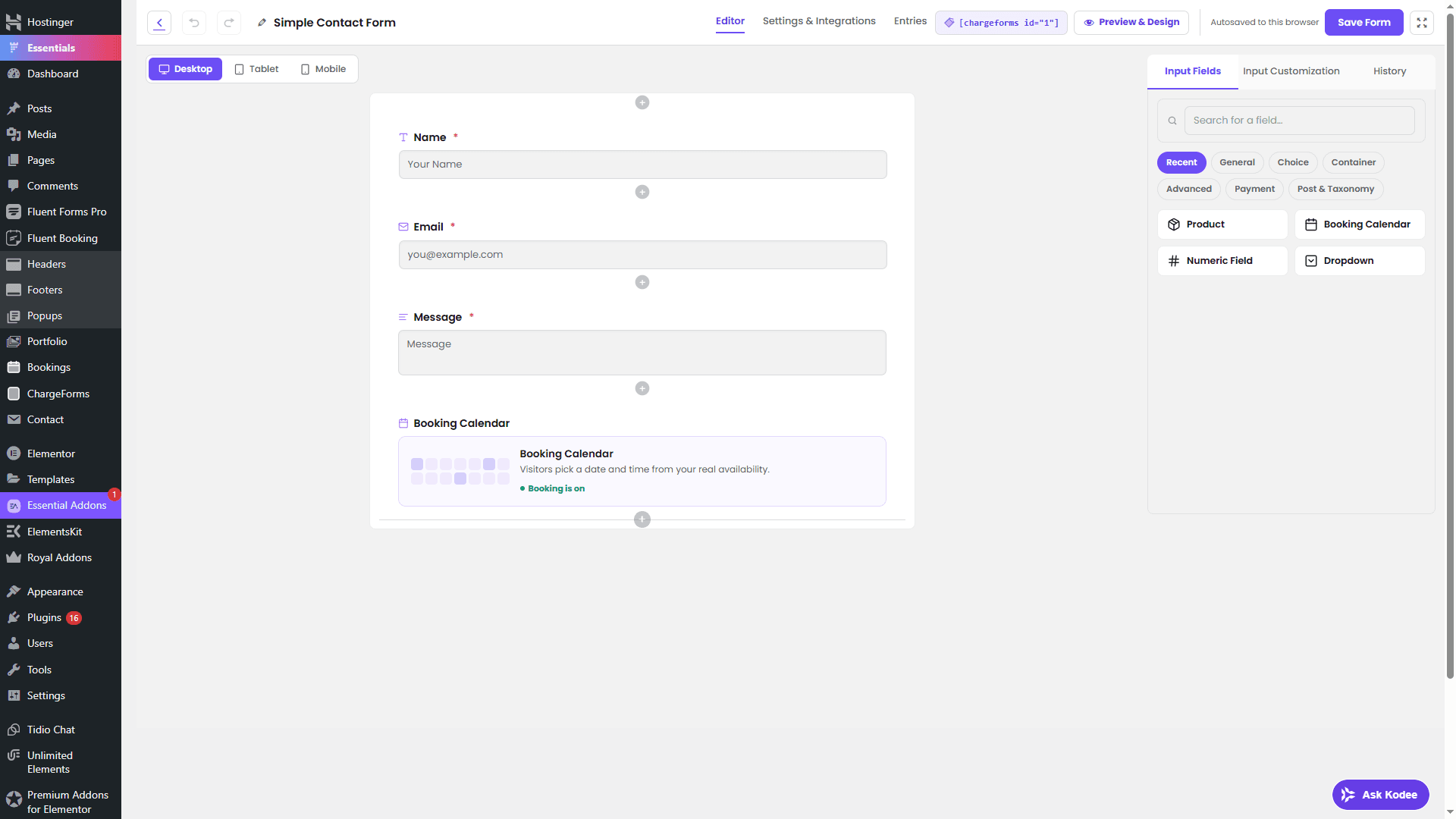
Start from the real fields an intake form needs, in the order that gets you the most useful answer before the least motivated leads drop off (which is itself a useful signal — someone who abandons a 4-field form was never a serious lead):
- Full name
- Email address
- Company (optional for B2C, required for B2B)
- What do you need help with? — a short description field, or a dropdown of your actual service categories if you offer a fixed set
- Budget range — a dropdown or radio group ("Under $5k", "$5k–$15k", "$15k+", "Not sure yet"), not an open text field. An open field lets people avoid answering; a dropdown forces a real signal.
- Timeline — another dropdown ("ASAP", "Within a month", "Just exploring")
Adding conditional logic to actually qualify leads
This is the part a plain contact form can't do. With conditional logic set on the Budget Range field:
- Show a different message instead of the standard submit button when someone selects "Not sure yet" combined with "Just exploring" — something like "We typically work with budgets starting at $X — feel free to reach out once you have a clearer scope," which is honest rather than silently ignoring the submission later.
- Route the notification email differently based on budget — a "$15k+" submission can notify you immediately with a "high priority" subject line, while a "Under $5k" submission routes to a queue you check weekly instead.
- Reveal additional fields only when relevant — a "What platform is your project on?" field only needs to appear if the service dropdown selected was "Website Development," not for every submission.
Every rule is checked again on the server when the form is actually submitted, not just in the browser — so a visitor can't bypass the qualifying logic by disabling JavaScript.
Making it multi-step
Once an intake form has 6+ fields including qualifying questions, splitting it into steps consistently outperforms one long page:
- Step 1 — Contact info (name, email, company)
- Step 2 — Project details (what they need, service category)
- Step 3 — Budget & timeline (the qualifying fields)
- Step 4 — Confirm & submit
A visible progress bar matters here specifically because intake forms ask more of a visitor than a simple contact form does — showing "step 2 of 4" reduces the sense that this is an open-ended commitment.
Starting from a template instead of a blank canvas
Rather than building every field from scratch, ChargeForms' free Quote Request Form template already includes name, email, company, project description, budget range, and timeline — the exact intake-form field set above — fully editable once you start from it, including adding conditional logic and multi-step layout on top.
Where this fits for agencies and consultants specifically
If client intake is a recurring part of how you bring on new work, see ChargeForms for Agencies for project questionnaires and proposal forms reused across client sites, or ChargeForms for Consultants if the intake form should also collect payment for a paid discovery call in the same step.
The bottom line
A client intake form's real value isn't collecting contact info — a plain contact form already does that. It's the qualifying fields and the conditional logic layered on top that turn a form into an actual filter, so the leads that reach your calendar are the ones worth the time. Free plugins vary widely on whether this is actually possible without paying first — see Gravity Forms vs. Ninja Forms or WPForms vs. Ninja Forms if you're evaluating which plugin's free tier actually supports conditional logic before you build on it.
Frequently asked questions
What fields should a client intake form have?
At minimum: name, email, company (if B2B), a description of the project or need, budget range, and timeline. Agencies and consultants typically add qualifying questions specific to their service — the point is collecting enough detail before a call that you're not re-asking the same questions live.
Should a client intake form ask about budget?
Yes, if you want it to actually filter leads. A budget range field (not an exact number — a range like "Under $5k / $5k-$15k / $15k+") is the single most effective qualifying question on an intake form, and pairing it with conditional logic lets you route or reject submissions below your minimum before they ever land on your calendar.
Can I make a WordPress intake form multi-step?
Yes — breaking a long intake form into 3-4 short steps (Contact Info → Project Details → Budget & Timeline → Confirm) consistently completes at a higher rate than the same fields on one long page. ChargeForms includes multi-step forms with a progress bar on the free plan.
Does a client intake form need to accept payment?
Not usually — most intake forms qualify a lead before a paid engagement starts. But if you charge for the initial consultation itself (common for consultants), a payment field can go directly on the same form, so a lead pays and gets qualified in one step rather than a separate checkout afterward.
Is there a free WordPress plugin that does conditional logic on intake forms?
Yes — ChargeForms includes conditional logic (nested AND/OR/NOT rule groups) on its free plan, unlike Gravity Forms (no free plan at all) or WPForms/Ninja Forms (conditional logic requires a paid tier). See the full comparisons for specifics.
Related posts
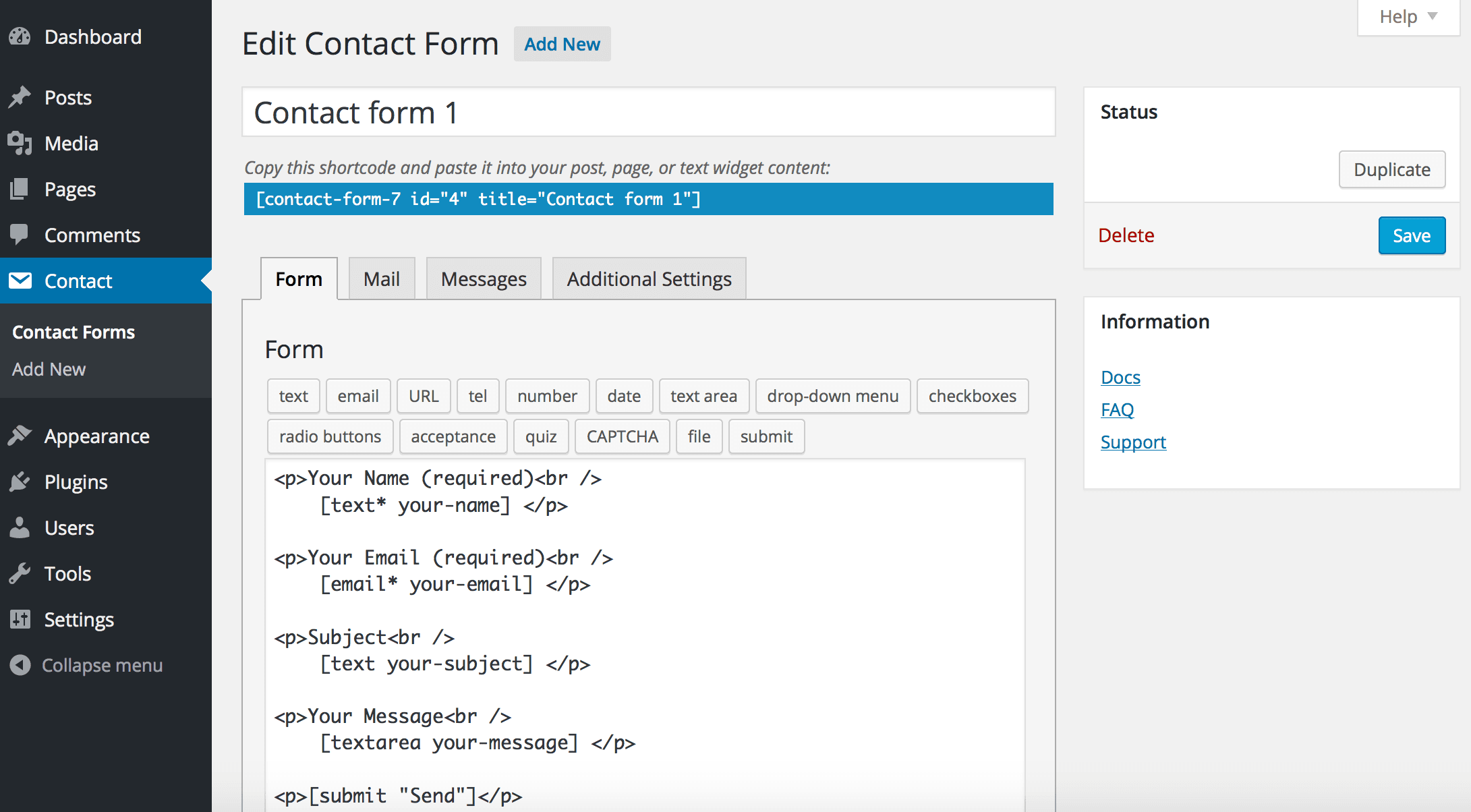
Contact Form 7 Is in Maintenance Mode: What That Actually Means
Contact Form 7's creator confirmed at WordCamp Asia 2026 that version 6.2 is the last feature release — the plugin now gets security patches only. Here's what changes, what doesn't, and what to actually do about it.