How to Build a Quote Request Form in WordPress (Free)
The most common reason a quote request form doesn't work isn't the form software — it's the fields. "Name, Email, Message" gets you a message that says "need a quote for my kitchen," which tells you nothing about size, materials, or budget, and turns every single lead into a phone call before you can even estimate the job. A quote request form's entire job is collecting enough detail that a real number can follow without that call.
Why vague requests cost more than they're worth
Every quote request that arrives without enough detail costs time twice — once to read it, and again for the back-and-forth needed to actually price it. Worse, a vague request is disproportionately likely to be someone comparison-shopping without a real budget, since a serious buyer with a specific project in mind will usually give specific answers when asked. The fields on the form are a filter as much as they're an intake mechanism.
The fields a quote request form actually needs
- Full name
- Email address
- Company (if B2B — leave optional for consumer-facing service businesses)
- What do you need a quote for? — a dropdown of your real service categories, not an open text field. This single change does more to improve lead quality than any other field on the form.
- Project description — a short text field for the specifics a dropdown can't capture (square footage, materials, site conditions)
- Budget range — a dropdown, not an exact number field. "Under $2k / $2k–$10k / $10k+" filters far more effectively than an open number box someone can skip or lowball.
- Timeline — "ASAP," "Within a month," "Just planning ahead" — distinguishes a ready-to-hire lead from someone six months out.
Using conditional logic so one form handles every service type
Rather than building a separate form per service category, conditional logic lets a single quote request form ask category-specific follow-up questions:
- Selecting "Kitchen Remodel" reveals fields for square footage and whether plumbing/electrical work is involved.
- Selecting "Lawn Care" instead reveals a property-size field and a frequency dropdown (one-time vs. recurring).
- The notification email's recipient can change based on the category selected — a plumbing request routes to one team member, a landscaping request to another — without building two separate forms to get there.
Every rule is re-checked server-side when the form is actually submitted, not just in the browser, so the category-specific requirements can't be skipped by editing the page.
Should it collect payment?
Most quote request forms shouldn't — the whole point is pricing a job that hasn't been priced yet, so a Payment Item field with a fixed price doesn't fit most requests. The exception is a deposit or consultation fee collected upfront for certain service types (a paid on-site estimate, for example), where a Custom Amount field can sit on the same form without needing a separate checkout page afterward.
Starting from the template
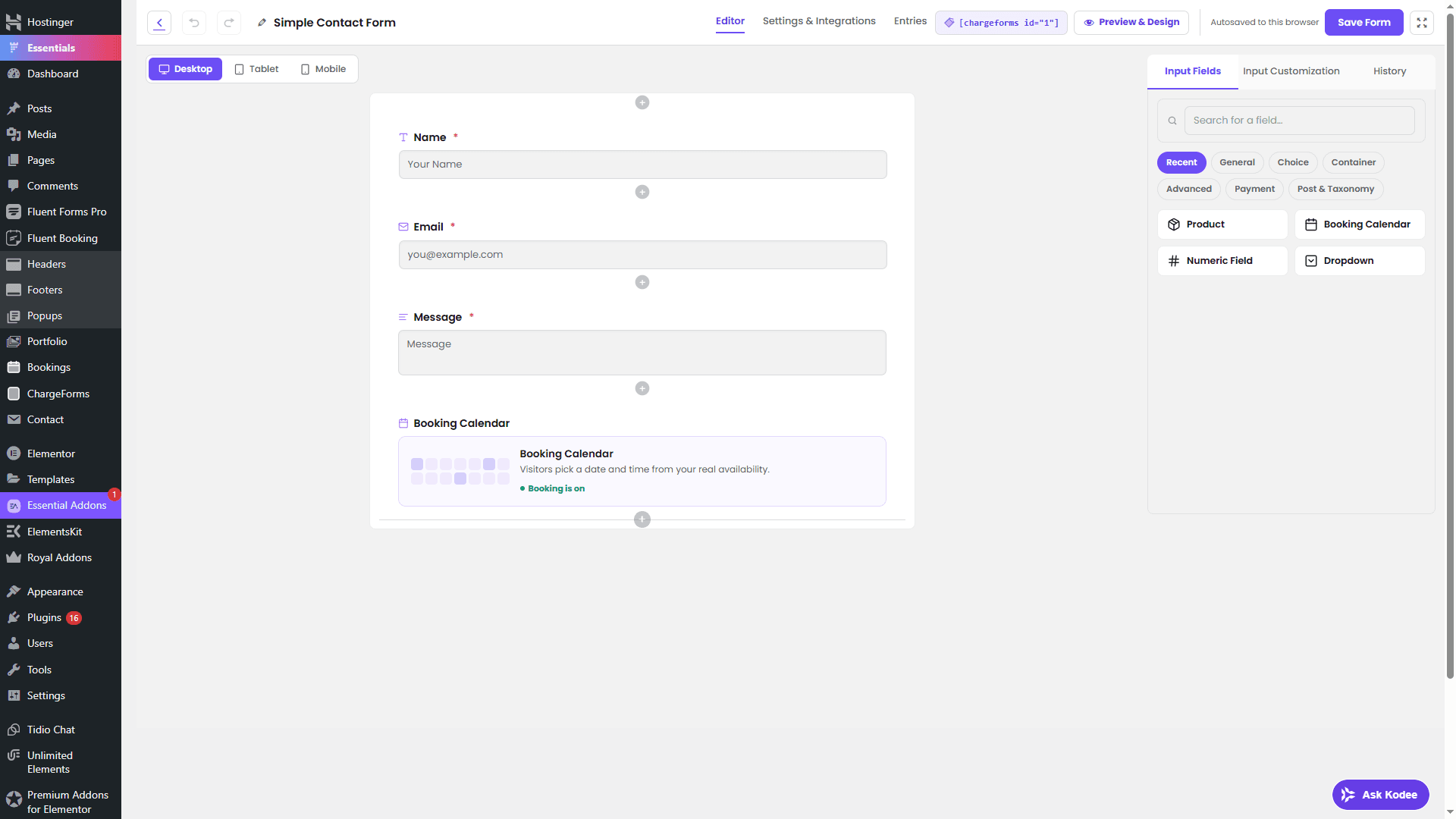
ChargeForms' free Quote Request Form template already includes the core field set above — full name, email, company, project description, budget range, and timeline — fully editable in the builder, including adding the category dropdown and conditional logic described here.
Where this fits for service businesses
If quote requests are the main way work comes in, see ChargeForms for Service Businesses for how quote requests, appointment bookings, and invoice payments fit together, or the broader client intake form guide if the same qualifying-questions approach applies to how you take on new clients generally.
The bottom line
A quote request form is only as useful as the fields on it. Swap the open "message" box for a category dropdown, a real budget range, and a timeline, and the same volume of submissions turns into leads that are actually priceable on the first read — no back-and-forth required before you can quote the job.
Frequently asked questions
What's the difference between a quote request form and a contact form?
A contact form asks how to reach someone. A quote request form asks enough about the actual job — scope, size, timeline, budget range — that whoever prices it can give a real number without a back-and-forth phone call first. The fields are the entire point; a quote request form with only name/email/message is just a contact form with a different label.
Should a quote request form show pricing to the visitor?
Usually not directly — most service businesses price jobs based on details that vary too much for a fixed price table (square footage, condition, materials, location). What the form should do is collect enough detail that a real quote can follow quickly, and optionally use a Custom Amount or Payment Item field if a deposit is collected upfront for certain services.
How do I stop getting quote requests that are too vague to price?
Make the scope-defining fields required, not optional — a dropdown for job type/size instead of an open text box, since an open field is the easiest one to skip past with one vague sentence. Conditional logic can also require more detail only for job types that actually need it, without making every submitter answer questions irrelevant to their specific request.
Can a quote request form route to different people based on the job type?
Yes — with conditional logic on the recipient of the notification email, a quote request for one service category can route to a different team member or department than another, without building a separate form for each.
Is there a free WordPress plugin with a quote request template?
ChargeForms includes a free Quote Request Form template with the core fields already built — full name, email, company, project description, budget range, and timeline — fully editable once you start from it, no paid plan required.
Related posts
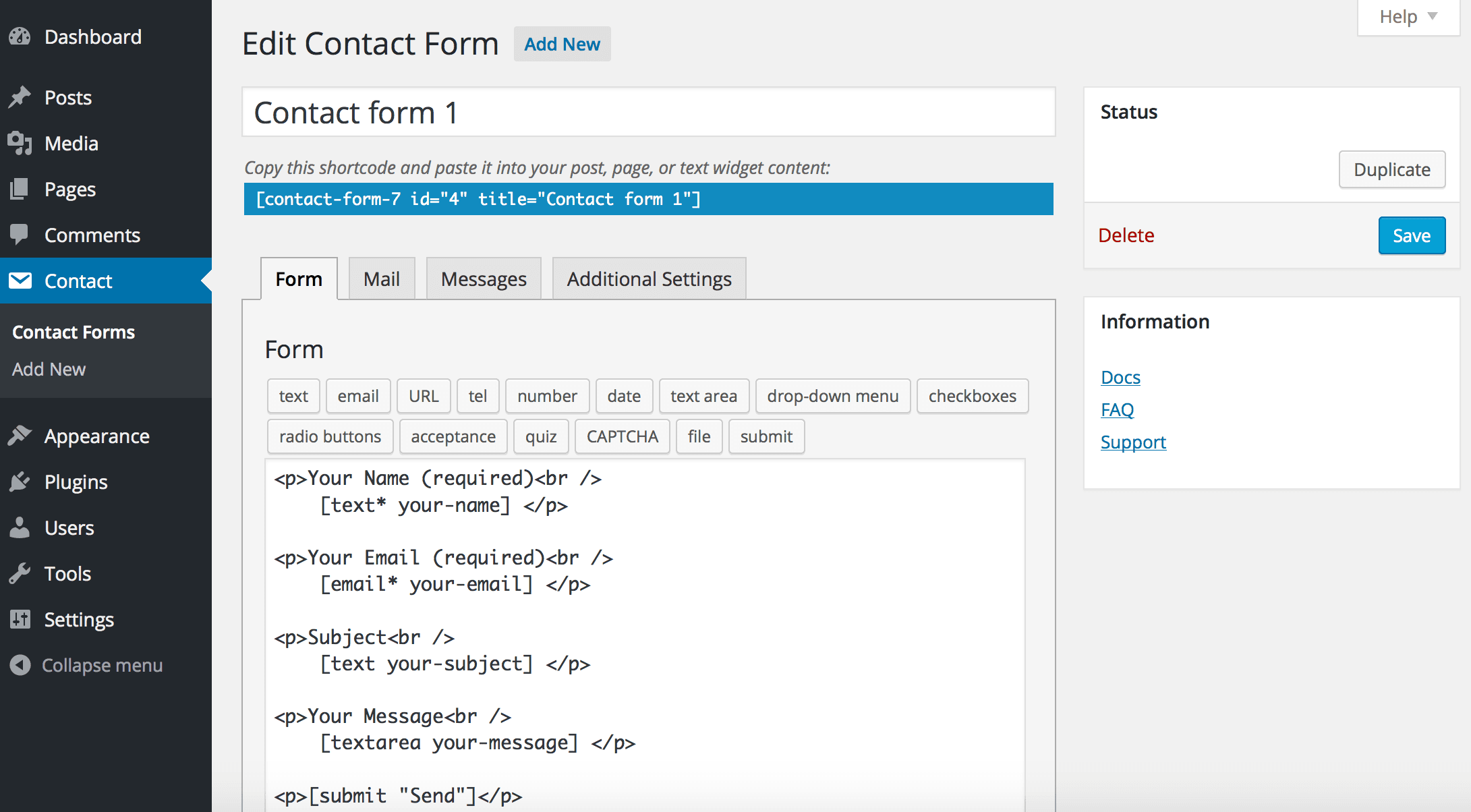
Contact Form 7 Is in Maintenance Mode: What That Actually Means
Contact Form 7's creator confirmed at WordCamp Asia 2026 that version 6.2 is the last feature release — the plugin now gets security patches only. Here's what changes, what doesn't, and what to actually do about it.